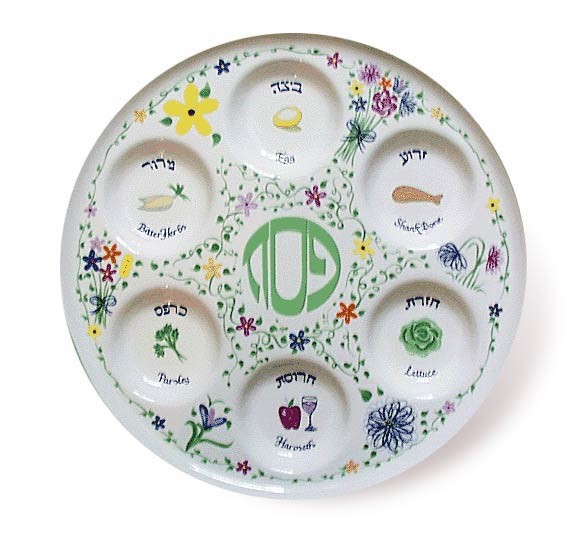
the Passover
逾越节
逾越节
The Meaning of the Passover
The Passover, also called the Feast of Unleavened Bread or Pesach, was one of three holidays or festivals commanded by God in which all Jewish males were required to gather before the Lord. The other two festivals were Pentecost (Feast of First Fruits) and the Feast of Tabernacles or Ingathering (cf. Exodus 23:14-17).
The Passover is a central event in Israel’s history. It involved the deliverance of Israel from Egyptian slavery and is a picture of the Christian’s deliverance from the bondage of sin. The deliverance for Israel, like ours, involves the ransoming of God’s people through the shedding of blood. The Hebrews were instructed to provide a substitute (Exodus 12:3-14) and spatter the blood on the doorposts (we must pass through the blood of Christ, who is the Door—John 10:7-9—to be saved from God’s judgment). When the Lord went throughout Egypt destroying the firstborn, and saw the blood on the doors, everyone behind those doors was passed over and spared (we are redeemed by the blood of Jesus, the firstborn of the Father – 1 Peter 1:18f; Colossians 1:15)1
The celebration of Passover always includes a meal or feast. Notice that the holidays commanded by God in Exodus 23 are all “feasts” of some sort. When a covenant (or contract, binding agreement) was reached between two parties, God was seen as the witness and the pact was sealed with a sacrifice. For the Christian, that sacrifice was Jesus’ own death on the cross.
The idea of covenant is very important in Scripture. Essentially there are two kinds (not old and new!): The Covenant of Promise and the Covenant of Law. The covenant of promise, initiated with Abraham, is a one-sided agreement in which God offers various benefits to Abraham (“I will bless you and make you a blessing” – Genesis 12:1-3; 17:1-8) and Abraham is only required to believe that the promise would be fulfilled. In this covenant, God commits Himself to Abraham and his descendants. Following Abraham, God renewed the covenant with Isaac and Jacob. Four hundred and thirty years after Jacob and his sons went into Egypt, after their descendents had become slaves, God remembered his promise to Abraham and made preparations for the Great Exodus (Exodus 2:23-25).
The Passover Haggadah in its literal sense means that narration of the Exodus story as recited at the Seder service. Seder means, “order” of the service at the festival meal. The custom of telling the story of the deliverance of Israel from Egypt goes back to the scriptural command: “And you shall tell your son in that day, saying: It is because of that which the Lord did to me when I came forth out of Egypt” (Exodus 13:8).
The actual dinner of antiquity, which is followed in the present-day Haggadah, goes back to Greek and Roman times and, therefore, is virtually the same today (with some modifications) as it was in Jesus’ time. We can then assume that the life changing events of the Last Supper, which was a Passover Haggadah, came about within the general context of the Seder. When we follow the order of the Seder and compare it with the events of the Last Supper, these events have new significance.