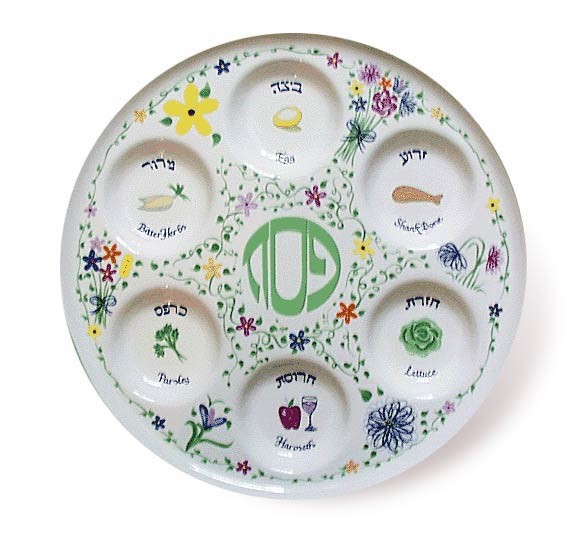
the Passover
逾越节
逾越节
3. The statement that Jesus was in the ground “three days and three nights” must not be understood as a literal twenty-four hours times three. Instead, it is an idiomatic expression that includes portions of days as well as entire days.
(a) The Old Testament data that shows the idiomatic expression of portions of as well as whole days to be one and the same include the following:
Gen 42.17, 18: "And he put them all in custody for three days. On the third day, Joseph said to them, "Do this and you will live, for I fear God" (and they are released ON that day from the context of verses 25-26). In this case “for three days” means only ‘into the third day.”
1 Samuel 30.12-13: "He ate and was revived, for he had not eaten any food or drunk any water for three days and three nights. David asked him, "To whom do you belong, and where do you come from?" He said, "I am an Egyptian, the slave of an Amalekite. My master abandoned me when I became ill three days ago. In this case "for three days and three nights” was actually fulfilled when the master left him “three days ago.”
1 Kings 20.29: "For seven days they camped opposite each other, and on the seventh day the battle was joined." In this case we have “for seven days” which means only “into the seventh day.”
2 Chronicles 10.5: "And he said to them, 'Return to me again in three days" (NAS) with verse 12: "So Jeroboam and all the people came to Rehoboam on the third day as the king had directed, saying, 'Return to me on the third day." In this case “in three days” is equivalent to “on the third day.”
Esther 4.16: "Go, gather together all the Jews who are in Susa, and fast for me. Do not eat or drink for three days, night or day. I and my maids will fast as you do. When this is done, I will go to the king, even though it is against the law. And if I perish, I perish.'" And then in 5.1: "On the third day Esther put on her royal robes and stood in the inner court of the palace, in front of the king's hall. " In this case, "on the third day" is equivalent to "for three days, night or day."
(b) The Talmud also reflects on this idiom:
Rabbi Eleazar ben Azariah, tenth in the descent from Ezra was very specific: "A day and a night are an Onah ['a portion of time'] and the portion of an Onah is as the whole of it" [J.Talmud, Shabbath 9.3 and b.Talmud, Pesahim 4a]6
This understanding was used in the numerous correlations between Jonah 1.17 (in the belly of the fish for three days and three nights) and the OT passages cited above [e.g. Mid.Rabbath on Genesis 56 (on 22.4); Genesis 91.7 (on 42.17-18)].
(c) There is one NT passage that indicates this Jewish idiom.
Matt 27.63: "Sir," they said, "we remember that while he was still alive that deceiver said, ‘After three days I will rise again.’ 64 So give the order for the tomb to be made secure until the third day." Note that “after three days” was somehow equivalent to “until the third day” (not “until the fourth day”).
Therefore, Jesus celebrated the Passover on Thursday night, and was crucified Friday from 9 am to 3 pm. The Pharisees and Sadducees celebrated Passover on a special Sabbath Friday night, and Jesus rose again on Sunday morning the third day as the Scriptures teach. The only groups that appear to dispute this (after looking around the Web) are unbelieving Jews, cultists, secularists, and Eastern Orthodox. Even messianic Jewish groups acknowledge that the Last Supper was the Passover meal.7